NFL Fantasy Football
- 2.3
- Rating
- 5.00M
- Installs
- Free
- Price

 Analysis by App-foxy
I approached NFL Fantasy Football as someone who wanted one practical place to manage a fantasy team during the football season, rather than as a casual news app. That distinction matters. This is a sports app from NFL Enterprises LLC, and its focus is fantasy football: making decisions, checking how those decisions develop, and staying connected to the weekly rhythm of the league. My experience was useful when I treated it as a decision-making tool, but less satisfying when I expected every part of the fantasy experience to feel equally smooth.
The app is free to install and is rated for Everyone, which makes it easy for a household or group of friends to try. It has attracted over five million installs, although its average rating sits at 2.3 from around seventy-nine thousand ratings. I would not dismiss it on that score alone, because fantasy apps often receive criticism during busy periods when users are trying to make urgent lineup changes. Still, the rating is an important warning: convenience can depend heavily on how well the app behaves when you need it most.
From a fantasy idea to a weekly decision
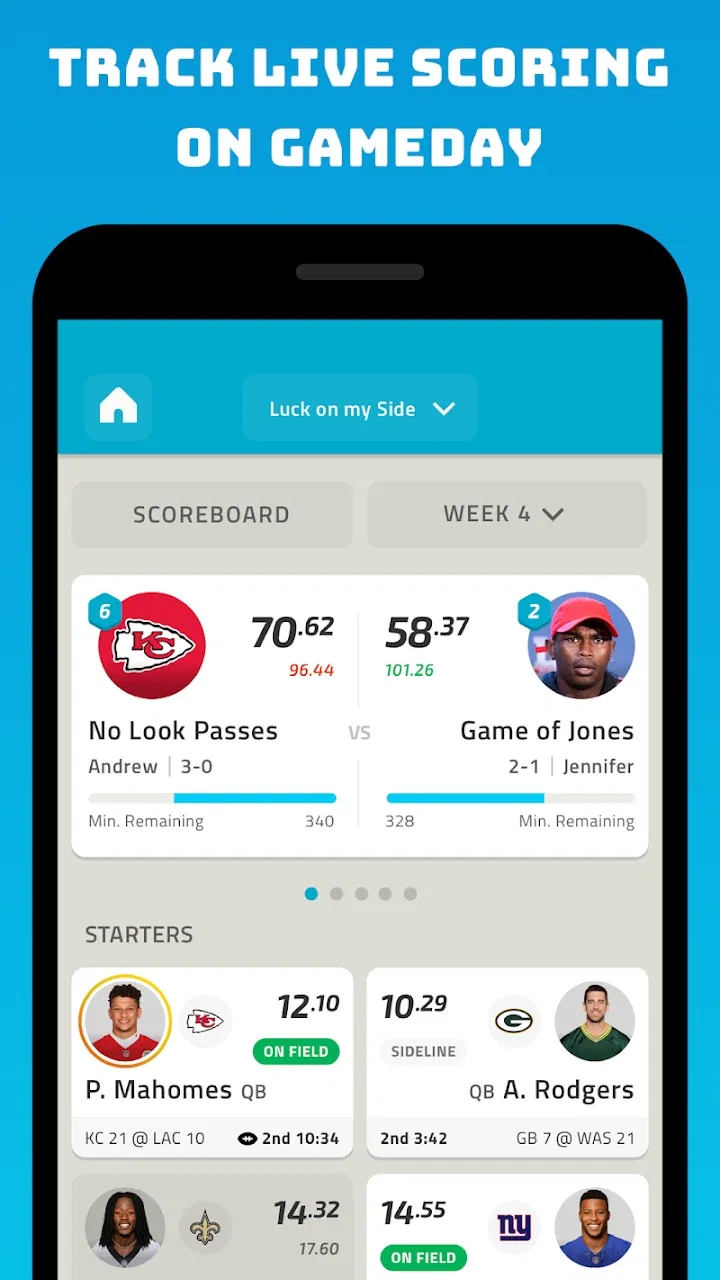
The starting condition is familiar. I have a fantasy roster, a matchup to prepare for, and a limited amount of time before games begin. Instead of jumping between a general sports app, a browser, messages from league members, and a separate fantasy service, I use the NFL app as the central point for checking my team and deciding what to do next.
You May Also Like

 Blood Strike: 2.5 Anniversary
Blood Strike’s Loadouts Turn Every Drop Into a Tactical Gamble
A close look at Blood Strike’s custom loadouts: how fast access to signature weapons reshapes its battle royale rhythm, rewards preparation, and narrows the gap between fights.

 Pandora - Music & Podcasts
Pandora’s Music Is Easy to Start, but Harder to Recover
Pandora’s strength is its low-effort path from a seed to a station. Its weak spot is how much confidence it asks you to place in connection, setup, and quiet recovery.

 8 Ball Pool
 Is Built on Rivalries, Rematches, and Routine
A close look at the rivalries, rematches, shared routines, and unanswered safety questions that turn a quick pool match into a persistent mobile community.

 Samsung Music
’s Quiet Strength Is Playing What You Already Own
Its reach comes less from spectacle than from dependable access to a personal library. That simplicity is both the app’s strongest retention engine and its ceiling.

 AccuWeather: Weather Radar
AccuWeather Review: A Quick, Clear Forecast for Everyday Decisions
For everyday plans, the best forecast is the one you can understand quickly. AccuWeather makes rain timing, radar, and local conditions easy to act on, with a few trade-offs.

 Hill Climb Racing
Why Hill Climb Racing Still Turns Crashes Into One More Run
A tiny car, a bumpy hill and one more upgrade: Hill Climb Racing keeps resurfacing because its simple chaos makes every near-miss feel personal.
More From Our News Desk
View All News


That workflow begins with orientation. I first look at the fantasy area rather than wandering through general football content. The useful question is not simply “what happened in the league?” but “what does this mean for my lineup?” A player’s real-world situation only matters to me if it changes whether I should start that player, leave them on the bench, or consider another move.
This is where the app’s identity as an official NFL fantasy product is helpful. The experience is built around football rather than around a broad collection of unrelated sports. If I already follow the NFL closely, the context feels natural. I am not learning a fantasy game in isolation; I am connecting roster choices with the games I am already watching.
The next step is reviewing the roster before making a change. I prefer to check every starting position, not just the obvious star player. A late decision at one position can affect how aggressively I approach another. For example, if I am uncertain about a player whose game starts later, I may value flexibility elsewhere rather than locking in a marginal replacement too early.
This is one of the less obvious habits that makes the app more useful: I use it to preserve options, not merely to chase the highest projected outcome. Fantasy football is full of uncertainty, and an app cannot remove that. What it can do is make the sequence of decisions clearer. I check who is already committed, identify the positions that still need attention, and only then decide whether a move is actually necessary.
Turning information into an actionable lineup
Once I have reviewed the roster, I move from observation to action. A good fantasy workflow should answer three practical questions: who is available, who is eligible for a position, and what happens to the player I remove? The NFL fantasy experience is most valuable when those steps are visible enough that I can make a change without losing track of the wider lineup.
I do not recommend making changes simply because a player had one disappointing performance. A better approach is to use the app as a checkpoint. I compare the player’s role with the needs of my roster, consider the timing of the upcoming game, and then decide whether the change improves the team or only satisfies the urge to do something. That restraint is especially important for new fantasy managers, who can mistake constant activity for good management.
Another practical tip is to review the lineup in two passes. In the first pass, I make the obvious checks: empty positions, unavailable starters, and players whose games have already begun. In the second, I look for strategic problems, such as having too many players tied to the same game outcome or leaving no room to react later. This two-pass method reduces the chance of fixing one problem while creating another.
The app is also better suited to repeated short visits than to one long session. I might open it before work, return during a break, and check again before the later games. That pattern fits fantasy football because information arrives over time. I would not expect one visit to settle the entire week; the value comes from returning when a decision becomes relevant.
Where the handoffs happen
Fantasy management is rarely a solo process, even when I am the only person pressing the buttons. There are handoffs between real-world football news, my own judgment, the league’s rules, and the app’s roster interface. Each handoff can introduce friction.
The first handoff is from football information to fantasy action. I may hear that a player’s situation has changed through a broadcast or conversation, then open the app to see what that means for my roster. The app is not a replacement for thinking. It is the place where I turn that thought into a lineup decision. If I rely on a headline without checking the actual roster consequences, I can make a move that looks sensible but does not improve my matchup.
The second handoff is from my decision to the rest of the league. A roster change is not just a private note; it can affect available players, trade conversations, and how league members interpret my strategy. I find it useful to make the app the authoritative record of the action, while using messages or conversation for explanation. That avoids confusion over whether a move was merely discussed or actually completed.
The third handoff is between the app and the game schedule. Timing becomes a major source of pressure. A player may be a good choice in general but a poor choice if I cannot replace them later. My most reliable routine is to handle early-game positions first, then leave later positions open where possible. This is not a flashy feature, but it is a meaningful workflow improvement because it protects flexibility.
For a group of friends, the app can serve as the shared reference point for the league. That is useful when people have different levels of fantasy experience. A beginner can focus on the roster in front of them, while a more experienced player can think about timing, risk, and future options. The trade-off is that the app does not eliminate disagreements or make league rules self-explanatory. The people in the league still need to communicate clearly.
The result after the decision
The result I want is not simply a higher-looking projection. I want to finish a lineup check knowing that every position has been considered, every move had a reason, and I have not accidentally removed a useful option. NFL Fantasy Football can support that outcome when I use it as a structured checklist rather than as an endless stream of updates.
In a realistic everyday scenario, I might open the app on a Sunday morning while preparing breakfast. I check the roster, notice that one position needs attention, and review the alternatives. I start the player whose game provides the best balance of expected contribution and timing flexibility. Later, before the next set of games, I return to check the remaining positions. The app fits this routine because fantasy management is naturally divided into small decisions.
The strongest benefit is the connection between the fantasy team and the NFL environment. I do not need a separate mental model for the sport and the fantasy roster. The app keeps my attention on the players and games that affect my league. For someone who follows the NFL every week, that focus is more useful than a generic sports score app that treats fantasy as an afterthought.
It can also help reduce avoidable mistakes. I am less likely to forget a lineup check when the fantasy team is available in the same football-centered environment I already associate with the season. That does not guarantee a good result, but it improves the process. In fantasy football, a careful process is often more valuable than one dramatic move.
There is an important limitation, though: the result still depends on the quality of my judgment and the reliability of the app at the moment of use. A clean roster screen cannot predict injuries, game scripts, or unexpected performances. I also would not treat the app’s presence as proof that it is the best choice for every league. Managers who want extensive analysis, highly customizable tools, or a more specialized statistics workflow may prefer a dedicated fantasy platform.
Practical trade-offs before committing
The app is free, which lowers the barrier to entry. That makes sense for someone joining a league for the first time or trying to coordinate a casual competition with friends. At the same time, in-app purchases range from $6.99 to $99.99 per item. I would therefore pay attention to any purchase prompt and decide in advance whether I need anything beyond the basic experience. A free starting point is useful, but it does not mean every optional part of the app has no cost.
The current version is 3.60.21, and the app requires at least iOS 9. That broad operating-system requirement should make it approachable for people using older Apple devices, although an older supported system does not guarantee that every phone will feel equally quick or comfortable. On a smaller screen, careful lineup review can take more concentration, especially when I am trying to compare several options under time pressure.
The rating of 2.3 is the clearest sign that I should keep expectations realistic. I would not install this app solely because it carries the NFL name and assume the experience will be flawless. The official connection is a strength for football context, but it also raises expectations around reliability. If a fantasy decision is urgent, I prefer to open the app early rather than wait until the final minutes before a game.
That early-check habit is one of my strongest recommendations. Give yourself enough time to reopen the app, review the lineup, and correct a mistake. Rushing turns a manageable interface problem into a lost decision. I also recommend confirming the final lineup after making a change instead of assuming the tap worked. That small verification step is especially worthwhile when the outcome affects a whole league matchup.
Who will enjoy it and who should look elsewhere
I think NFL Fantasy Football is a reasonable choice for NFL followers who want an official, football-focused place to manage a fantasy roster. It suits casual and intermediate players who value a straightforward weekly routine: inspect the team, make a few decisions, return as games approach, and follow the result. It is also a sensible starting point for a friend group that does not want to compare several fantasy services before beginning.
I would be more cautious if you are a highly analytical manager. If your ideal workflow depends on deep customization, extensive historical comparisons, advanced projections, or detailed control over every part of the experience, a specialist fantasy service may be a better fit. The same applies if your main goal is broad sports coverage rather than NFL fantasy management.
It may also be the wrong choice for someone who dislikes time-sensitive apps. Fantasy football requires attention around game schedules, and no official branding can change that. If you want a game that can be played casually whenever you have a spare minute, this is not the same kind of experience. The weekly decisions have consequences, and delaying them can limit your choices.
For families and younger users, the Everyone rating removes one obvious barrier, but I would still explain the competitive side of fantasy football before handing it over. The app may be accessible, yet the surrounding league can involve trades, rivalries, and disappointment. The software is only one part of that experience.
My final assessment after following the full workflow
After using NFL Fantasy Football from the initial roster check through lineup decisions and the eventual matchup result, I see it as a practical official option with a clear audience. Its best quality is focus: it keeps fantasy football connected to the NFL instead of making the activity feel detached from the sport. That focus makes the weekly routine easier to understand, particularly for people who already watch the games.
Its weaknesses are just as relevant. The low average rating suggests that many users have encountered enough friction to leave dissatisfied, and I would not ignore that signal. The app is not a substitute for a careful fantasy strategy, and it may not satisfy managers who want a more advanced alternative. Timing, verification, and patience matter more here than the store summary might suggest.
My recommendation is to try it if you want a free NFL-centered fantasy starting point, but approach it as a tool for a disciplined weekly workflow rather than a magic shortcut. Check your roster early, protect later options, verify every move, and keep a second source of football judgment in your routine. Used that way, the app can make fantasy management more organized. If you need deep customization or cannot tolerate last-minute friction, compare it with a dedicated fantasy alternative before making it the center of your league.
For me, the deciding question is simple: do you want an official football environment that helps you manage the decisions you already make, or do you want the most powerful fantasy analysis workspace available? NFL Fantasy Football answers the first question reasonably well. It is less convincing for the second, and knowing that difference before installing it will lead to a much better experience.
FAQs for NFL Fantasy Football
01What features does the NFL Fantasy Football app offer?
The NFL Fantasy Football app provides a comprehensive platform for managing your fantasy football teams. Key features include player statistics, real-time scoring updates, expert analysis, and news alerts. Users can also engage in mock drafts, set up leagues with friends, and access video highlights, making it an all-in-one tool for fantasy enthusiasts.
02Is the NFL Fantasy Football app available for both Android and iOS devices?
Yes, the NFL Fantasy Football app is available for download on both Android and iOS platforms. It is free to install from the Google Play Store and Apple App Store, ensuring that users on either operating system can enjoy the full range of features and updates throughout the NFL season.
03Does the app offer any in-app purchases or subscriptions?
While the NFL Fantasy Football app is free to download and use, it may offer optional in-app purchases. These could include premium features such as ad-free experiences, enhanced analytics, or exclusive content. Users should check the app’s settings or store page for details on available purchases.
04How does the app enhance the fantasy football experience?
The NFL Fantasy Football app enhances the fantasy football experience by providing seamless access to player data, expert insights, and match updates. It allows users to manage their teams efficiently, participate in live drafts, and receive tailored recommendations, making it easier to make informed decisions and enjoy the thrill of the game.
05Can I join multiple leagues using the app?
Yes, the NFL Fantasy Football app allows users to join multiple leagues, whether they are public or private. This feature is designed to cater to users who wish to participate in various competitions, enhancing their engagement and providing a more dynamic fantasy football experience across different leagues.
Pros
- Easy-to-use interface for all users.
- Real-time updates and player stats.
- Customizable leagues and settings.
- Extensive player analysis and insights.
- Engaging community and social features.
Cons
- Occasional app crashes during peak times.
- Limited offline functionality.
- In-app ads can be intrusive.
- Requires constant internet connection.
- Some features behind paywall.

NFL Fantasy Football
Gallery